Flies are one of the most common pests found in homes, kitchens, and commercial properties. They breed quickly and can spread diseases such as salmonella and E. coli, contaminating food and surfaces wherever they land. Even a small number can multiply fast, becoming a health and hygiene concern.
Different species, such as house flies, fruit flies, and cluster flies, are attracted to food waste, moisture, or decaying materials. Once indoors, they lay eggs on food or organic matter, making it vital to act quickly to prevent an infestation.
Cluster Flies in Lofts
If you find large numbers of flies slowly buzzing at upstairs windows in autumn, they are probably cluster flies rather than house flies. English Heritage's fact sheet on cluster flies describes a very unusual life cycle. Adults lay eggs in grass in spring and the larvae develop inside earthworms, so the flies come from the surrounding fields and lawns rather than from anything in the house. In autumn the adults look for somewhere to spend the winter, gather on warm, south facing walls and then crawl in through gaps around windows and eaves, settling in lofts and roof voids in clusters that can number more than a thousand. Turning the heating on can wake them, which is when they appear at the windows.
Because the larvae grow in earthworms under grass, homes beside fields, paddocks and large lawns, such as those on the farmland edge around Ashford and Canterbury, are more likely to see them. Cluster flies do not breed indoors and are mainly a nuisance, although they leave some spotting and staining. Their dead bodies can feed carpet beetles, so it is worth clearing them away. Our guide on cluster flies in the loft goes into treatment in more detail.
What the Type of Fly Tells You
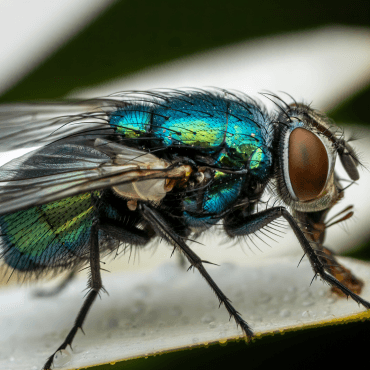
Identifying the fly points straight to the source. House flies breed in rotting refuse and food waste, so they lead back to bins and waste areas. The larger blowflies, bluebottles and greenbottles, frequently come from a dead animal such as a pigeon or a mouse, so a sudden burst of them indoors can mean something has died in a loft, chimney or under the floor. Small fruit flies breed in overripe fruit and damp organic matter around sinks and drains. Finding and removing the source is what stops the flies, which is why our treatment starts with an inspection rather than a spray, and why understanding what causes fly infestations helps keep them away.
Flies in Food Businesses
Flies matter most where food is prepared. The Food Standards Agency's guidance on starting a food business lists flies among the insects that food businesses have to keep out, alongside cockroaches, beetles and ants. It says windows and other openings that open to the outside must be fitted with insect-proof screens that can be easily removed for cleaning, and that rubbish should be cleared from food rooms quickly so it does not build up and attract pests.
For a kitchen, cafe, pub or takeaway, that means finding where the flies are breeding and getting in, not just killing the ones in sight. Screens and electric fly killers help, but they work best once the source has been dealt with, and for commercial properties we can provide regular maintenance and monitoring so a problem is caught before an inspection rather than at one.
Fly Control Process
We use a thorough and effective process to locate, remove, and prevent fly infestations.
01 Fly Control Inspection
A qualified pest control technician will carry out a detailed inspection to identify the fly species and locate breeding sites. We assess the level of infestation and determine what conditions are allowing flies to thrive, such as poor waste management or standing water. Based on this, we create a tailored treatment plan for your property.
02 Fly Control Treatment
We use safe and effective treatments designed to remove adult flies and disrupt their breeding cycle. Treatments may include fly screens, insecticide sprays, bait stations, or electric fly killers, depending on the type and severity of the infestation. For commercial properties, we can also provide regular maintenance and monitoring to prevent future outbreaks.
Preventing Future Fly Problems
Once the infestation has been dealt with, prevention is key to keeping flies away. A few simple steps can help.
- Keep bins tightly sealed and clean them regularly.
- Remove food waste promptly and clean up spills immediately.
- Store food in sealed containers.
- Fix leaks and avoid leaving standing water in sinks, drains, or outdoor areas.
- Use fly screens on windows and doors to block entry points.
- Maintain good ventilation in kitchens and food preparation areas.
By following these measures, you can help stop flies from returning and keep your property hygienic and pest-free all year round.