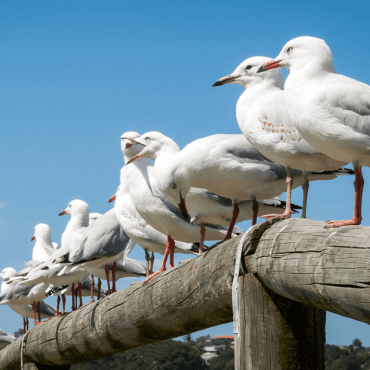
Seagulls are a growing problem in many towns and coastal areas across the UK. While they are protected by law, their presence can cause serious issues for homes, businesses, and public spaces. Seagulls are known for aggressive behaviour during nesting season, loud noise, and creating mess from nesting materials and droppings. Their waste can also damage buildings and spread bacteria.
These birds often nest on rooftops, chimneys, and ledges, returning to the same sites each year. Once they establish a nest, removing or disturbing it without professional help can be illegal. Because of this, early prevention and safe control are essential.
Gulls and the Law
All gulls are protected under the Wildlife and Countryside Act 1981, and it is an offence to injure or kill one or to damage or destroy an active nest or its eggs. Herring gulls, the gulls most likely to nest on house roofs, are also red listed in the UK because their numbers are falling, however many you see in a seaside town. Lesser black-backed gulls tend to favour the larger flat roofs of industrial and commercial buildings.
Noise, mess and minor damage to property are not reasons the law accepts for removing an active nest. Where a nest poses a genuine risk to public health or safety, you can apply to Natural England for a licence, and you will be expected to show that deterrents which do not harm the birds have been tried first. That is why the most effective step is proofing a roof before the nesting season starts, because once a nest is active the options narrow considerably.
Gulls on the Kent Coast
Coastal towns such as Folkestone, Hythe, Dover, Deal and Dungeness give gulls what they need. The RSPB notes that herring gulls began moving from cliff ledges onto town rooftops in the 1920s, and that they feed on fish, insects, carrion and any discarded rubbish. Gulls also return to the same sites each year, so a roof that has held a nest once is likely to be used again.
Our bird proofing uses netting, spikes and optical gels, and John also flies his own Harris hawk, a natural deterrent that moves gulls and pigeons on without harming them. If gulls are swooping at you while chicks are on the roof, the RSPB suggests carrying an umbrella going in and out, and the parents will keep defending the chicks until they can fly. Our guide on how pest control can legally help with gulls covers the options in more detail.
Seagull Control Process
Our seagull control service focuses on safely deterring birds and preventing future nesting.
01 Seagull Control Inspection
A pest control specialist will assess your property to identify nesting or roosting areas and determine the best deterrent method. We also check for factors attracting gulls, such as food waste or open bins. After inspection, we provide a tailored control plan suited to your property and comply with wildlife protection regulations.
02 Seagull Control Treatment
We use a range of humane bird control methods, such as bird spikes and netting, to prevent gulls from landing or nesting. These deterrents are discreet, effective, and long-lasting. In some cases, you can apply for a licence to remove nests if they pose a health or safety risk. Our aim is to protect your property while ensuring all work meets UK wildlife laws.
Preventing Future Seagull Problems
- Keep bins closed and dispose of waste properly to avoid attracting gulls.
- Avoid feeding birds near your property.
- Schedule regular maintenance to check that deterrents remain secure.
- Remove food debris from outdoor areas.
- Repair damaged roofs or ledges where gulls could nest.
By combining professional bird-proofing with good property management, you can keep your home or business free from seagull disturbance safely and legally.